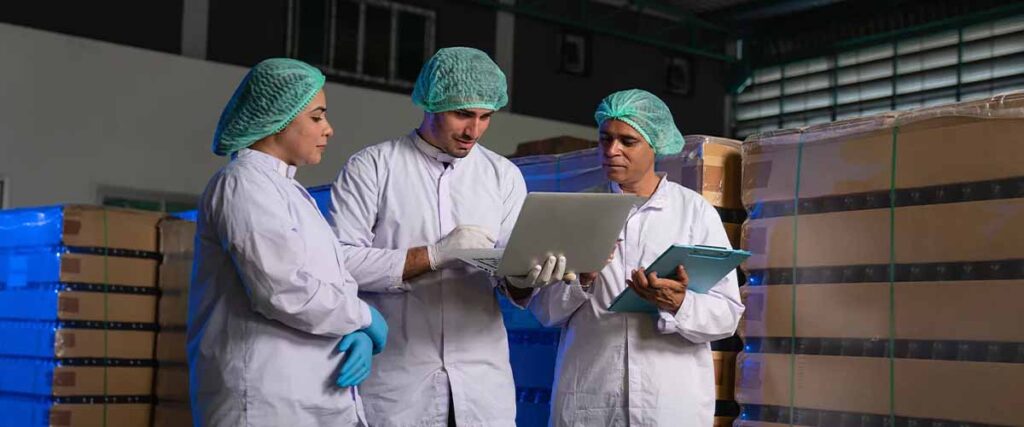
In order for healthcare services to continue sustainably, it is of great importance that pharmaceuticals, medical devices, vaccines, and other healthcare products are delivered to the right place, at the right time, and under the right conditions. All of these processes are referred to as healthcare logistics. Since the transportation, storage, and distribution of healthcare products directly affect human life, healthcare logistics is carried out with special standards and carefully managed operational processes.
What Is Healthcare Logistics?
Healthcare logistics refers to the planned management of the storage, transportation, distribution, and inventory control of healthcare products such as pharmaceuticals, medical supplies, medical devices, vaccines, blood products, and laboratory samples. In this process, product safety, hygiene conditions, and temperature control are of great importance.
Unlike other logistics sectors, the margin for error in healthcare logistics is extremely low because most transported products directly affect human life. For example, if a vaccine that requires cold chain transportation is not maintained at the proper temperature, the product may completely lose its effectiveness.
Main Components of Healthcare Logistics
1. Storage Process
In healthcare logistics, raw materials, auxiliary materials, finished products, medical devices, biological products, and medical consumables must be stored under appropriate storage conditions. Environmental conditions such as temperature, humidity, and light should be monitored in a controlled manner according to the structure of the products.
In pharmaceutical warehouses, temperature monitoring should be carried out regularly, expiration dates should be checked, and products should be stored in compliance with GDP/GMP standards. Special storage areas should be used for products requiring cold chain conditions. Incorrect storage conditions may lead to deterioration in product effectiveness, quality loss, and economic damage.
Especially in recent years, pandemic processes, disasters, and global health crises have made the importance of healthcare logistics more visible. Failure to deliver a pharmaceutical product to the patient on time or transport it under appropriate conditions may cause serious health problems. Therefore, healthcare logistics is one of the fundamental building blocks for the sustainability of healthcare services.
2. Cold Chain and Controlled Temperature Management
Vaccines, biological products, and certain special pharmaceuticals must be stored and transported within specific temperature ranges. This process is referred to as “cold chain management.” A break in the cold chain may negatively affect the effectiveness and safety of the product. Therefore, temperature monitoring systems are used both in storage areas and transportation vehicles.
In addition, many pharmaceuticals must also be stored and transported at controlled room temperature in compliance with GDP (Good Distribution Practices) and GMP (Good Manufacturing Practices) standards. Regular monitoring of temperature, humidity, and environmental conditions is of great importance in maintaining product quality in healthcare logistics.
3. Transportation and Distribution
In healthcare logistics, delivering products to healthcare institutions at the right time and under appropriate conditions is of great importance. Vehicles transporting pharmaceuticals and medical products must comply with GDP standards and be equipped with temperature and humidity control systems. Especially for temperature-sensitive products, in-vehicle values should be monitored regularly.
In addition, transportation vehicles should undergo validation processes to test whether they can maintain the specified temperature ranges.
The Contribution of Technology to Healthcare Logistics
Technological developments provide great convenience in healthcare logistics. Thanks to barcode systems, GPS tracking applications, digital inventory management, and automation systems, processes have become safer. In addition, with artificial intelligence-supported analyses, product demands can be predicted in advance and inventory planning can be carried out accordingly.
Especially through temperature monitoring systems, it is possible to instantly check whether pharmaceuticals are being transported under suitable conditions. This both increases patient safety and reduces product losses.
Conclusion
Healthcare logistics is one of the most important fields operating in the background of the healthcare system. Through a properly planned logistics process, pharmaceuticals, vaccines, and medical products can be safely delivered to the required locations. With the advancement of technology, healthcare logistics is becoming faster, safer, and more sustainable.
In the future, with the growth and digitalization of the healthcare sector, the importance of healthcare logistics will increase even further. This field, which directly affects human life, will continue to be one of the fundamental factors determining the quality of healthcare services.
Sources
- World Health Organization – Health Logistics
- Türkiye Cumhuriyeti Sağlık Bakanlığı
- Journal of Humanitarian Logistics and Supply Chain Management